How to check whether hotel toiletries are vegan
Identify the exact product in the room, then look for evidence that applies to that product and variant. Check vegan ingredients and animal-testing information separately; a cruelty-free description alone does not establish vegan ingredients. If the bottle or dispenser cannot be identified, record it as unverified and use an alternative you already understand.
This is a product check, not a verdict on an entire hotel. A property may have different items across rooms, suppliers or dates. A precise answer about the actual shampoo or body wash is more useful than a broad assurance that the accommodation is vegan-friendly.
Identify the exact bottle or dispenser
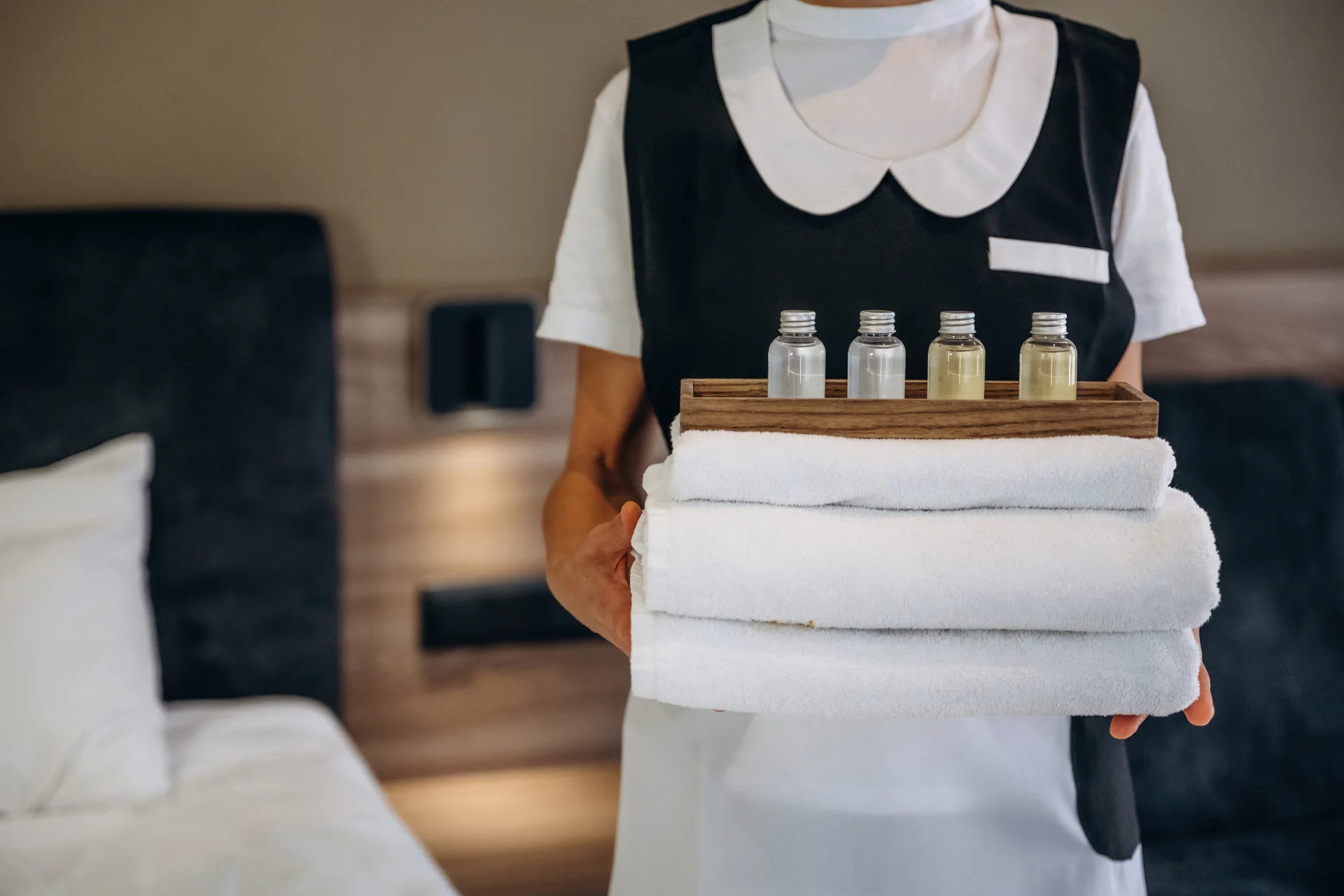
Begin with the brand, product line and variant. “Luxury toiletries” is a marketing description, not an identity you can research. “Shampoo from this brand” may still be too broad if the company sells several formulas or ranges. Ask for a readable label or photograph that identifies the item currently supplied.
For a dispenser, establish what is inside it rather than relying only on the container's appearance. A name on a reusable bottle does not explain an unidentified refill. If staff cannot match the contents to a specific product, keep that uncertainty visible instead of searching for a similar-looking bottle online and treating it as the answer.
Record enough detail to recognise the item later: brand, line, variant and the date of the reply. You do not need to collect a large dossier. The aim is to stop different products being merged into one vague brand-level claim while you decide what to use during the stay.
A message about next month's booking can identify what the property currently expects to supply; it cannot ensure the room stock will remain unchanged. Plan to compare the actual item at arrival with the evidence you obtained, especially if the reply described a supplier generally rather than a specific labelled product.
Use an evidence ladder
Match the strength of the answer to the strength of the evidence. The Vegan Society's Trademark standards address animal-derived ingredients and animal testing within the scheme's defined scope. A recognised product certification can therefore be useful, provided that the exact product is covered and the information is current.
A manufacturer statement for a named variant can also answer a precise question, but read what it says. An ingredients statement and a testing-policy statement establish different things. A hotel employee repeating the word vegan without identifying the product leaves more work to do; it is not equivalent to product-level documentation.
| Evidence | What it can support | What it does not establish | Next action |
|---|---|---|---|
| Current certification for the exact product | The product meets the named scheme's criteria | Every item sold by the brand is covered | Match the actual variant |
| Manufacturer's exact-product response | The specific points answered | Claims outside the response's scope | Check ingredients and testing separately |
| General hotel or brand description | A reason to ask a focused question | The identity or status of this item | Request product details |
| Unidentified bulk contents | No dependable product match | Vegan or non-vegan status | Mark unverified and use a known alternative |
This ladder avoids two unhelpful extremes: accepting every reassuring phrase, or declaring a product non-vegan simply because you have not obtained enough information. Unverified describes the evidence gap honestly. It is a decision state, not an accusation about the property or manufacturer.
Separate vegan and cruelty-free checks
Ask what the product's ingredients and manufacturing information establish, then ask what the animal-testing information establishes. The two questions are related but not interchangeable. A statement focused only on testing cannot, by itself, resolve whether animal-derived ingredients are involved.
Similarly, a list that appears to contain no obvious animal ingredient does not answer every question about manufacture or testing. If a product's status matters to your choice, use the manufacturer's or certification scheme's actual explanation rather than trying to infer the entire supply chain from familiar words on the front label.
Keep the result in two fields. One field records the ingredient or vegan-product evidence; the other records the testing evidence and its scope. If the same recognised certification addresses both, note that the conclusion comes from that scheme's standards rather than assuming that every logo or ethical phrase has equivalent meaning.
Avoid turning the check into a list of supposedly safe hotel brands. The decision concerns the item being supplied, and product ranges or formulas can differ. A helpful record remains specific enough to be checked against the actual bottle without asking the reader to accept a broad hotel-chain endorsement.
Stop when the item remains unidentified
Set a practical stopping point. If the property cannot identify the product, the label is unreadable or the only answer concerns an unspecified bulk refill, further searches for similar packaging may not improve the evidence. Mark the item unverified and plan around that result.
Bringing an alternative you have already checked can be the simpler choice. Select it under the baggage and liquid rules that apply to your journey rather than assuming an accommodation guide establishes airline permission. You do not have to prove that the hotel item is unsuitable before deciding not to depend on it.
Do not use a lack of certification as proof that a product contains animal ingredients. Some products may not carry the scheme you recognise; the appropriate response is to seek other specific evidence or leave the status unresolved. Keep the distinction between an unknown answer and an adverse answer clear in your own notes.
The same stop rule helps with a vague positive reply. If staff answer a question about breakfast or bedding when you asked about shampoo, politely return to the exact item. If no usable identity emerges, stop treating the accommodation's broader positioning as a substitute for it.
Send one precise hotel request
Ask for information the property can realistically provide. A concise message might say: “Could you send the brand, line and variant of the shampoo, conditioner and body wash currently supplied, ideally with a readable label photograph? I would like to check the exact products' vegan and animal-testing information before relying on them.”
Send that through the property's real contact or reservation channel. There is no need to ask staff to certify a supply chain they may not control. Product identification is often the useful first step; the manufacturer's or scheme's information can then answer the more specialised questions.
If you receive a specific answer, retain the date and product details together. If it is incomplete, ask only for the missing information. Repeating a long general request can make it harder to see which point remains unanswered.
Recheck the item in the room
Compare the actual label or dispenser with the product you researched. If it differs, the earlier evidence does not automatically transfer. Check the replacement or use your known alternative rather than assuming that a similar scent, bottle colour or brand name establishes the same status.
Keep this product decision separate from the accommodation decision. An appealing room, a vegan meal option or helpful service does not answer the toiletries question, and one verified amenity does not certify the whole hotel. Use the site's hotel notes for broader planning while keeping this check tied to the exact item.
Before using it, you should be able to identify the product, state which evidence applies and recognise any remaining uncertainty. If you cannot, choosing the alternative you brought is a complete practical response; you do not need to turn an unresolved item into a confident claim.